
 Download PDF File:
 » Product Description
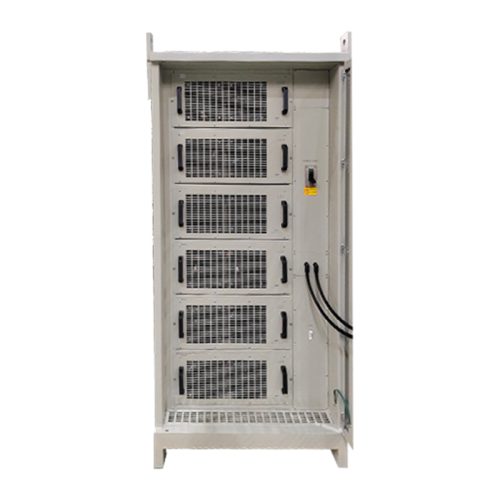
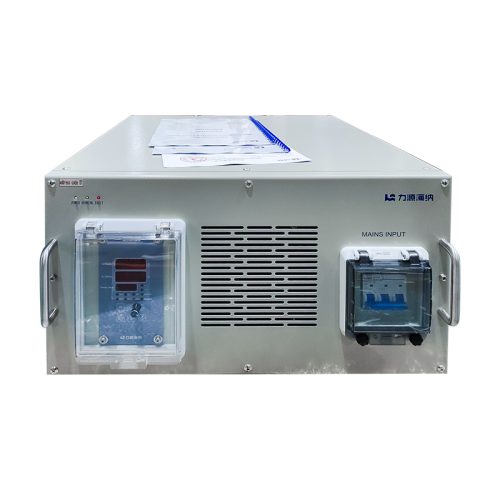
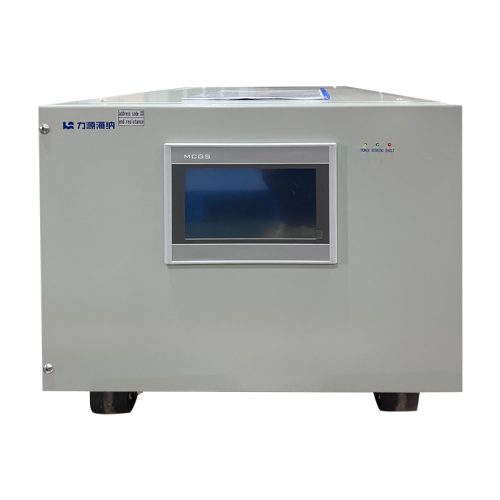
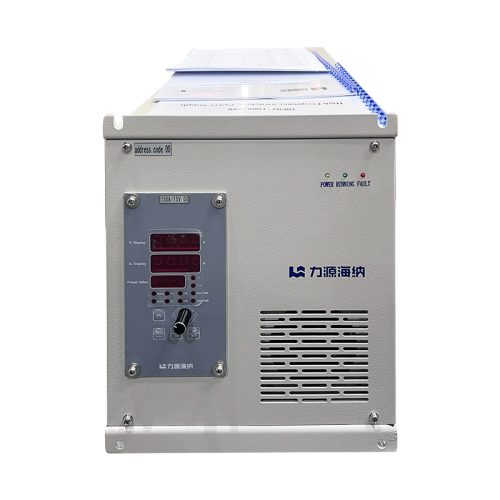
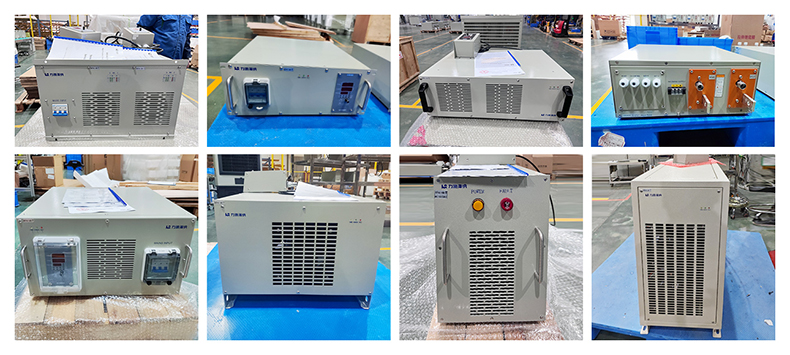
In a 12V 400A rectifier for industrial nickel electroplating, the AC input voltage is first converted to a pulsating DC voltage by a rectifier circuit. This pulsating DC is then filtered to produce a smooth DC output. The “variable frequency conversion” stage inverts this high-voltage direct current into approximately 30kHz high-frequency alternating current. This high-frequency AC is then transformed into secondary voltage via a high-frequency transformer and filtered through a high-frequency rectifier circuit to produce the required output voltage. The Electroplating Rectifier Power Supply employs a control circuit to sample output voltage and current. These sampled signals undergo closed-loop feedback to generate pulse width modulation (PWM) signals, which regulate the inverter circuit and maintain stable output voltage/current – a critical requirement for precision electroplating applications.» Product Applications
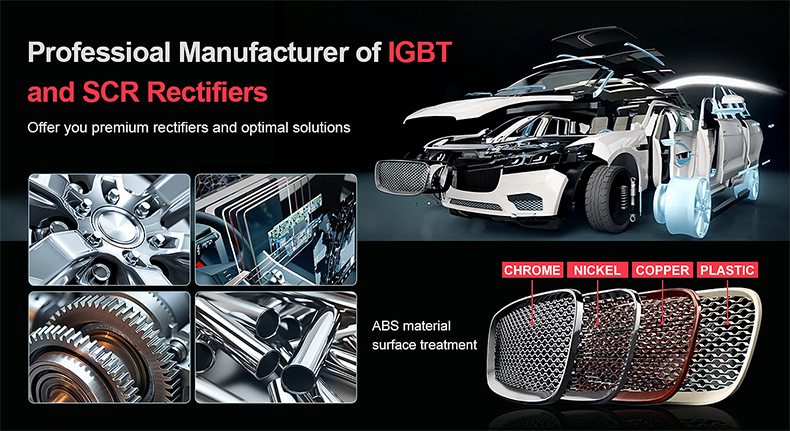
Manufacturers widely use electroplating rectifier equipment for various surface treatment applications, including PCB electroplating, hard chrome coating, copper plating, nickel plating, zinc plating, gold plating, tin plating, and silver plating, among other metal finishing.1.Field application diagram:
2.Industry application examples:
» Technology Advantages
› Modular parallel connection › Optional N+1 redundant backup › Capable of online hot maintenance › RS485 digital control function › Low-voltage MOS tube rectification › High power factor, high efficiency › Reasonable structural design › Effective sealed isolation › No water joint design inside the unit › Practical and effective multiple protection system › Full soft switch technology › High reliability › Low noise, high protection level» Role of electroplating
Protection Against Corrosion – Shields metal surfaces from rust and chemical damage (e.g., zinc plating on steel). Increased Wear Resistance – Hard coatings (e.g., chromium plating) reduce friction and extend part life. Improved Appearance – Adds shiny, decorative finishes (e.g., gold plating on jewelry, chrome on car parts). Better Electrical Conductivity – Used in electronics (e.g., copper plating on circuit boards). Enhanced Solderability – Improves bonding in electronic components (e.g., tin plating). Repair of Worn Parts – Restores dimensions and functionality (e.g., rebuilding engine components). Special Industrial Uses – Provides heat resistance (e.g., nickel plating in aerospace). – Used in medical devices (e.g., biocompatible coatings).» Types of electroplating
› Copper Plating Purpose: Enhances adhesion for subsequent layers and corrosion resistance. Note: Prone to oxidation (forms non-conductive copper oxide/green patina). Requires protective coatings. › Nickel Plating Purpose: Used as a base layer or decorative finish; improves corrosion/wear resistance. Electroless nickel offers chrome-like durability. Note: Magnetic properties limit use in electronics (e.g., DIN/N connectors) to avoid signal interference. › Gold Plating Purpose: Optimizes conductive contact impedance and signal transmission. Key: High stability but costly. › Palladium-Nickel Plating Purpose: Superior signal transmission and wear resistance vs. gold. Advantage: Combines palladium’s corrosion resistance with nickel’s hardness. › Tin-Lead Plating Purpose: Improves solderability. Trend: Phased out due to lead concerns; replaced by bright/matte tin alternatives. › Silver Plating Purpose: Best conductivity and signal performance. Note: Conducts even when oxidized but tarnishes over time. Higher cost. Selection Criteria Match plating type to application needs: corrosion/wear resistance, conductivity, cost, and environmental regulations.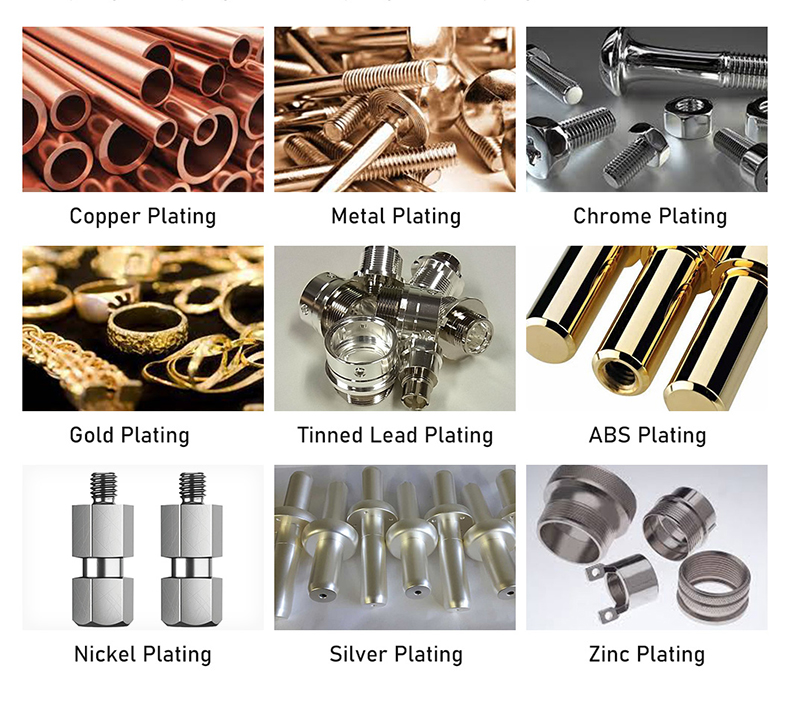
» Elements of Electroplating
› Cathode The object to be plated (e.g., connector terminals or metal surfaces) where metal ions deposit into a solid coating. › Anode Soluble Anode: Made of the plating metal. Dissolves during electrolysis to replenish metal ions in the solution. Insoluble Anode: Used for precious metals (e.g., white gold, iridium oxide). Does not dissolve but supplies electrons for reduction. › Plating Solution Contains ions of the target metal. Composition and concentration determine coating thickness, adhesion, and appearance. › Plating Tank Materials: Must resist corrosion and temperature fluctuations (e.g., polypropylene, titanium alloys). Role: Stores solution and maintains stable plating conditions. › Rectifier Converts AC to DC power to drive electrolysis. Adjust voltage/current to control deposition speed and coating thickness. › Auxiliary Equipment Filters: Remove impurities from the solution. Heaters: Maintain solution temperature. Stirrers: Ensure uniform mixing.» Component Part for Electroplating
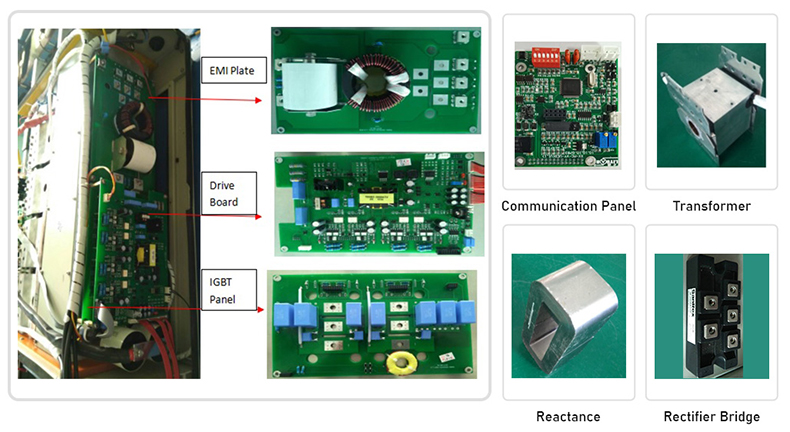
» Cooling Type for Electroplating
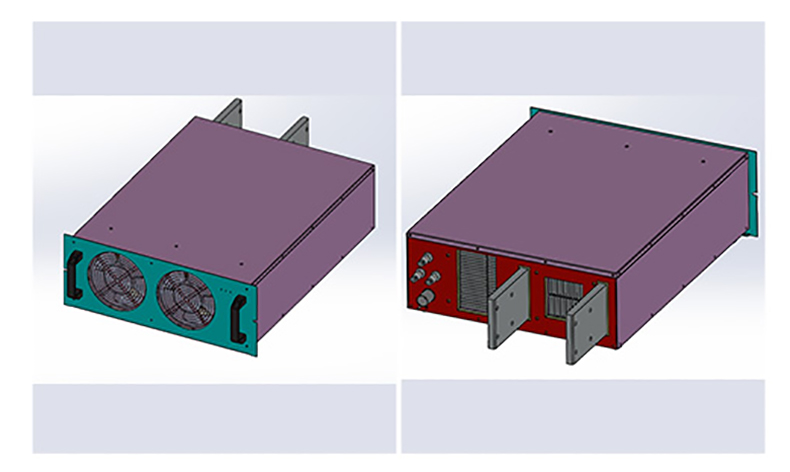
Air Cooling:Heat dissipation fan + air duct + comb heat sink
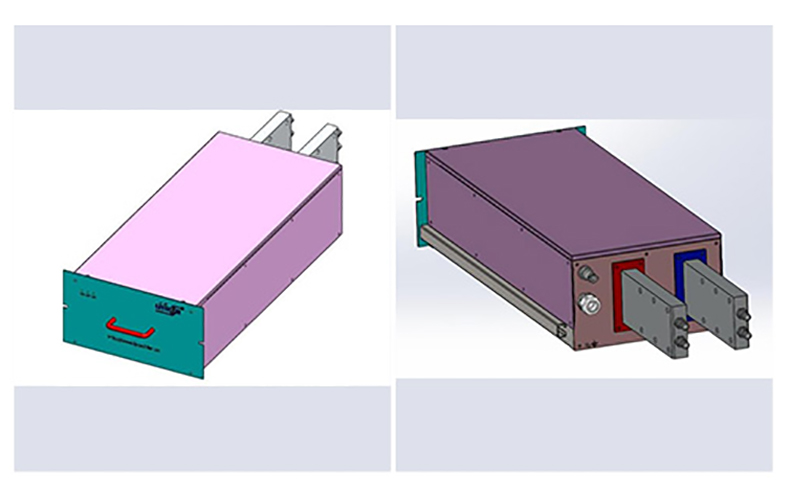
Water Cooling:Built-in water circulation line
» Technical Parameters
| Type of characteristics | Parameters | Technical Requirements |
| Input characteristics | Rated input voltage | Three-phase, AC380V±10% ,50HZ |
| Rated input current | AC 8.4A | |
| Rated input power | 5.6KVA | |
| Rated input power Ffactor | COSΦ≥0.95 | |
| Output characteristics | Output voltage | DC 0~12V |
| Output current | DC 0~400A | |
| Precision of steady current | ≤1% | |
| Precision of stable voltage | ≤1% | |
| Displayed precision | 0.1A,0.1V | |
| Rated output power | ≥91% | |
| Insulation characteristic | Insulation resistance | Input – Output: ≥5MΩ |
| Input – Cabinet: ≥5MΩ | ||
| Output – Cabinet: ≥5MΩ | ||
| Protective characteristics | With self-protection function under non-normal cases such as over-voltage, over-current, overload, short circuit and overheating | |
| Other characteristics | Noise | ≤75dB |
| Running state | Continuous full load run of product | |
| Load level | Level II | |
| Insulation grade of the transformer | Grade B | |
» Solution
Liyuan will keep up with the world’s latest technology closely, and uphold the concept of providing customers with high-quality power supplies and professional integrated services. With advanced design and rich experience in rectifier manufacturing, we will provide the best power solutions as well as the most stable and efficient power supply for users both at home and abroad.» Technical Capability
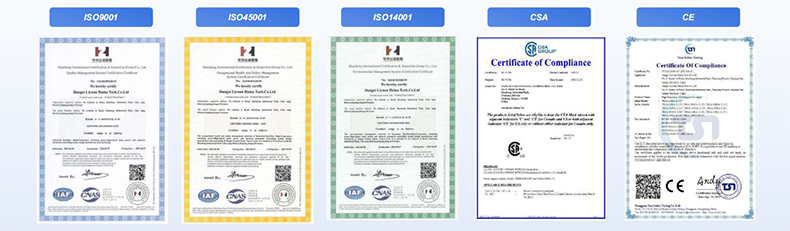
LIYUAN rectifier is the most competitive brand in China Company relies on strong technology research and development cooperation basis, created a number of advanced technology, in recent 3 years amounted to more than 30 to apply for a patent, which has nearly 10 patents of invention. Equipped with the national electric power transformation and control engineering technology research center (branch), and has set up a loan enterprise academician workstation. Strict implementation of ISO quality management system, and through the CE safety certification, has been implementing ERP management for many years, to achieve the network, systematic computer control, the formation of a standard, efficient modern management system.» Qualification certification
Liyuan adhere to innovation and the continuous improvement of power conversion efficiency and product quality. The increasing R&D investment every year, and cooperation with China’s well-known universities, we has established the research center of national electric power conversion and control engineering technology. Especially the related core patents of high-power synchronous rectifier power supply, stay ahead of the whole industry in China. The ISO 9001 quality management system has been fully implemented in Liyuan, including quality inspection of components in warehouse, production process inspection, and final product inspection.