

Spend an hour on a plating shop floor and you’ll hear a lot about plating rectifiers—but almost always about current. “We need another 500 amps on that tank.” Ripple? Hardly anyone brings it up, and waveform gets even less attention. But when a quality engineer starts tracing a reject-rate spike, the trail leads back to the electroplating rectifier more often than most operators realize.
Let’s start with ripple, because that’s where the confusion runs deepest when people talk about plating rectifier performance.
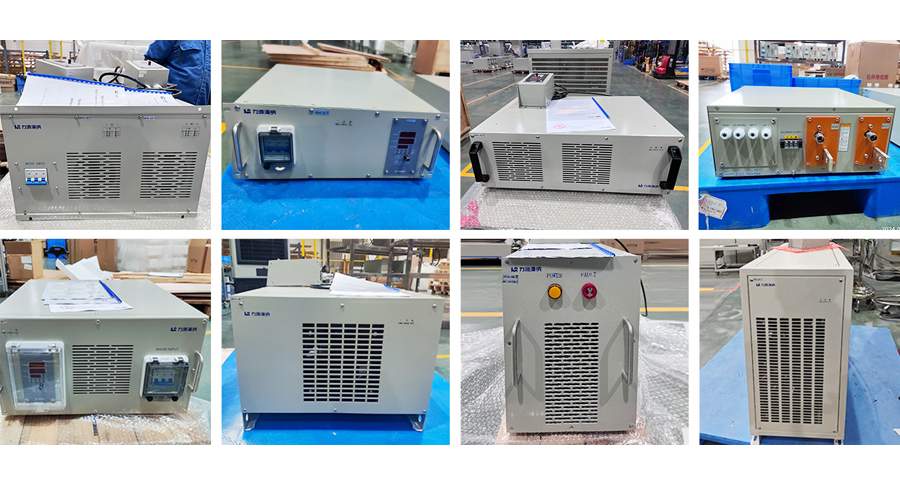
The Ripple Reality
Ripple is what you get when AC rides along on the DC output of your plating rectifier. Every electroplating rectifier puts out some amount of it. The real question is whether it matters for what you’re plating.
Try that with bright chrome. Once ripple from your plating rectifier creeps above 5% or so, the finish turns hazy. Run the same electroplating rectifier on a hard chrome tank, though, and the parts might come out perfectly acceptable. Same ripple from the same plating rectifier, different outcome. The difference? Hard chrome operates at current densities high enough that the deposit comes out coarse regardless.
Precious metals are where ripple from a plating rectifier does the most damage. Gold, silver, rhodium—expensive baths, and an electroplating rectifier with high ripple wastes them in two ways: heavier deposits than necessary, and occasional discoloration that calls for stripping and re-plating. That’s why external filters show up on precious-metal lines, knocking plating rectifier ripple down under 1%. The filter costs something upfront, but the drop in rework typically recovers that in a few months.
Acid copper is a different story. Feed it ripply DC from a plating rectifier and it still gives you bright deposits, provided you keep the average current within range.
A common mix-up: ripple and pulse get used interchangeably when discussing plating rectifiers, but they’re not the same. Ripple is noise—uncontrolled, does nothing useful. Pulse, on the other hand, is a shaped waveform your electroplating rectifier delivers deliberately to refine grain structure or improve distribution in deep recesses.
What You Get With Each Type of Plating Rectifier
You’ve got three choices when selecting a plating rectifier.
The old diode plating rectifiers—transformer and a bridge, nothing more. No regulation. Output from this type of electroplating rectifier goes up and down with the line voltage. Hardly anyone uses these plating rectifiers anymore except on really old lines.
SCR plating rectifiers earned their reputation for toughness. Feed these electroplating rectifiers dirty power—sags, spikes, phase imbalances—and they just grunt through it. Solid-state plating rectifiers can trip on the same conditions. But an SCR plating rectifier efficiency is nothing great: maybe 72% on a good day, and it drops when you’re not at full load. Ripple from this type of plating rectifier is high, too. And all that waste heat from the electroplating rectifier has to go somewhere—usually into your shop air, which means more air conditioning.
High-frequency switching plating rectifiers are what everyone’s buying now. These electroplating rectifiers convert AC to DC, then to high-frequency AC, through a tiny transformer, then back to DC. Efficiency on a modern plating rectifier stays up around 88–92% across the board. And they’re smaller—a lot smaller. A 1000A switching plating rectifier takes about the same floor space as an old 500-amp SCR electroplating rectifier.
But these plating rectifiers aren’t bulletproof. Clean power is a must, and cooling has to be adequate for any electroplating rectifier. A clogged fan or a failed water line on a switching plating rectifier can take out the IGBT bank before anyone notices the temperature gauge moving. When that happens to your plating rectifier, it’s usually a board swap, not something your maintenance guy fixes with a soldering iron.
Matching the Plating Rectifier to the Job
Hard chrome? Water-cool your plating rectifier. Chrome mist eats air-cooled heatsinks on electroplating rectifiers for breakfast.
Decorative chrome and nickel? Get a switching plating rectifier with low ripple. Pulse capability on your electroplating rectifier helps a lot if you’re doing complex shapes.
Precious metals? Specify a switching plating rectifier with ripple monitoring, so you know when your electroplating rectifier starts drifting.
PC board work, especially those deep small holes? Pulse reverse on your plating rectifier is almost essential. Straight DC from a standard electroplating rectifier just won’t push ions down into the hole.
On cooling: air-cooled plating rectifiers are fine for small, clean applications, but you have to stay on top of filter cleaning. Water-cooled electroplating rectifiers handle heat better and keep fumes out of the electronics, but they bring their own maintenance headaches. Hoses age. Fittings leak. And when water finds its way near high-voltage DC inside your plating rectifier, the result is rarely a quick fix.
What Goes Wrong with Plating Rectifiers in the Real World
Your plating rectifier output won’t adjust? Look at the mode setting. You can’t adjust current on an electroplating rectifier if the unit is set for voltage control.
Your plating rectifier trips immediately on startup? Check the fan. If it’s not turning, the thermal interlock on the electroplating rectifier kills the unit. Also check for phase loss—missing a leg on the input to your plating rectifier locks everything out.
Burning at edges even with normal current settings on your plating rectifier? Put a scope on the output of the electroplating rectifier. The panel meter shows average current, but the peak current is what burns edges, and ripple from your plating rectifier creates peaks you don’t see on the panel. A quick look at the plating rectifier waveform tells you more than an hour of guessing.
Does the Efficiency Difference Between Plating Rectifiers Actually Matter?
Yes, it does. You pay less upfront for an SCR plating rectifier, but you pay more to run that electroplating rectifier. The payback on the price difference between plating rectifier types usually lands somewhere between one and two years.
Run the numbers on a 10 kW DC load from your plating rectifier. An SCR electroplating rectifier at 72% efficiency draws 13.9 kW from the wall. A switching plating rectifier at 88%? 11.4 kW. The gap—2.5 kW—doesn’t sound like much when comparing plating rectifiers. Over 8000 running hours, though, it adds up to 20,000 kWh. At ten cents a kWh, that’s $2,000 a year from your plating rectifier electricity bill. And that’s before you factor in the air conditioning load from all that extra heat your SCR electroplating rectifier throws off.
Global Application Cases: Electroplating Rectifiers in Action
Case 1: Zinc Electroplating Rectifier Solution for Dubai Industrial Application

A customized 12V/500A regulated DC power supply system has been engineered for industrial electroplating requirements in Dubai. The solution features an air-cooled IGBT rectifier configuration capable of delivering 0-500A current output with 0-12V adjustable voltage range, specifically designed for zinc coating processes.
Case 2: Zinc Plating Rectifier Project in UAE
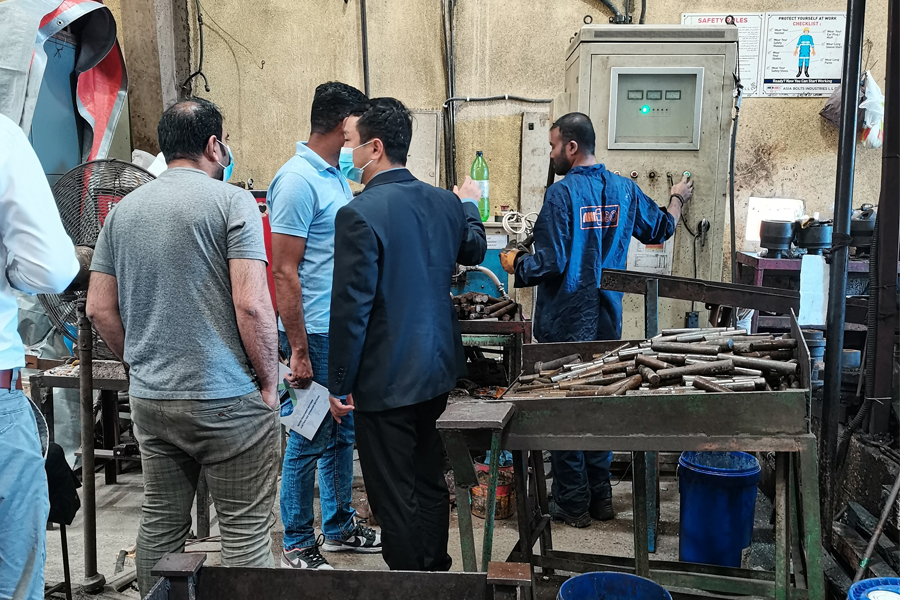
This project serves as a representative case in the surface treatment industry, demonstrating how modern IGBT technology can optimize electroplating operations while meeting the demands of challenging environments.
Case 3: Chrome Plating Project in Turkey
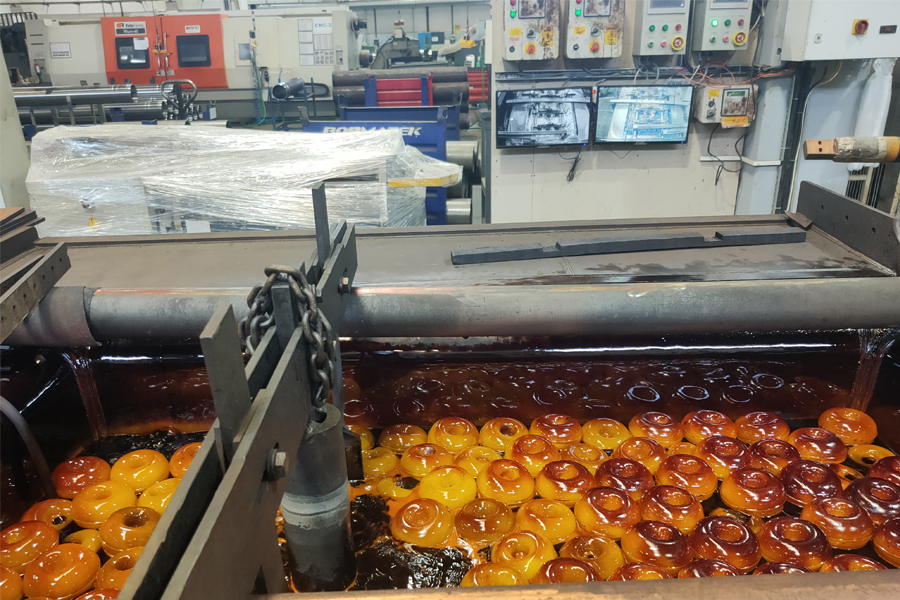
±10V 12KA polarity switching IGBT type rectifier for hard chrome plating production line. Polarity reversal ensures a uniform plating layer, while adopting an N+1 design according to the customer’s usage environment and production needs. If one module fails, it can be easily removed without stopping the production line, ensuring continuous operation in the surface treatment industry.
Case4: How Our Plating Rectifier Helped a German Leader Upgrade Legacy Equipment
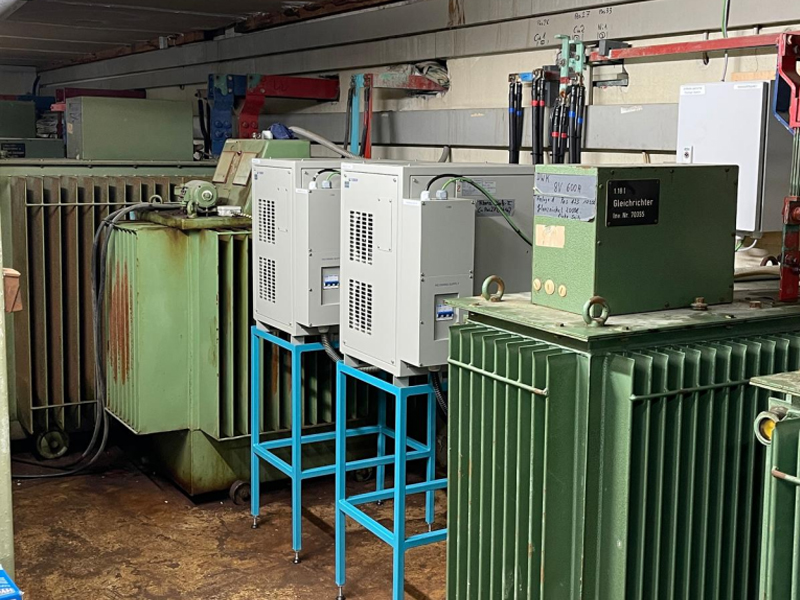
Their initial order for our 600A15V plating rectifier yielded exceptionally positive feedback. The rectifier’s performance and reliability have been key to maintaining the quality and consistency of their electroplating processes. Built with advanced technology, our rectifiers deliver high-precision current control—essential for uniform, high-grade plating results.
These four cases represent a fraction of our global installations. For industry-specific applications—including automotive, PCB, decorative plating, and hard chrome—see our full case study library below.
» More Liyuan Haina Plating Rectifier Case Studies
Suppliers of Electroplating Rectifiers: Liyuan Haina Rectifier
Liyuan Haina Rectifier is one of the professional manufacturers and suppliers in this field. With over 27 years of focus on R&D, design, production, sales, and technical services for industrial rectifiers, we have already exported our products to the United States, Canada, Britain, Portugal, Italy, Spain, South Africa, Russia, the UAE, Japan, South Korea, Malaysia, and other parts of the world. Equipped with a productive factory, we warmly welcome you to purchase our high-quality, Made-in-China products at competitive prices or try our customized service.
Among them, our electroplating rectifiers are extensively utilized for PCB electroplating, hard chrome coating, copper/nickel/zinc plating, and precious metal plating with gold and silver — delivering reliable power solutions for diverse hardware surface treatment applications.