
Specifying a plating rectifier means matching its internal characteristics—ripple, bandwidth, cooling margin—to your process load. Get it right and you reduce scrap and energy cost. Get it wrong and you chase variability forever. Load analysis, protection, efficiency, and supplier credentials are where the decision settles.

Why Choosing the Right Rectifier Matters for Electroplating?
For precision electroplating, choosing the right rectifier does more than convert AC to DC—it determines how uniformly current distributes across the cathode. Slow loop response or excessive ripple in the DC output causes point-to-point current density variations across the plated surface. On decorative chrome or gold lines, those variations show up as measurable thickness differences. Out-of-spec parts go to strip or scrap, along with the precious-metal anodes and electrolyte consumed in the process.
In a typical high-frequency switching plating rectifier, the AC input first passes through a rectification and filtering stage, where it is converted into an intermediate high-voltage DC bus. This DC bus is then inverted by the inverter stage into approximately 30 kHz high-frequency AC. The high-frequency AC is stepped down by a high-frequency transformer and rectified/filtered by a high-frequency rectifier circuit to produce the required low-voltage output. A control circuit continuously samples the output voltage and current; these signals are fed back in a closed-loop control scheme to generate pulse-width modulation (PWM) signals. The PWM signals regulate the inverter, ensuring stable output voltage and current—critical requirements for precision electroplating applications.
Sizing matters just as much. Oversize the plating rectifier and it runs most of the time at low duty cycles, where switching losses generate excess heat and stress the DC bus capacitors. Undersize it and the unit operates at the edge of its thermal budget—overtemperature protection kicks in, production stops, and you wait for it to cool down. A well-sized plating rectifier keeps its internal temperatures in check, which also helps stabilise bath temperature—a key factor in acid copper or nickel sulfamate processes where organic additives break down if the tank runs too warm.
Selecting the correct plating rectifier is therefore not a one-number decision. You match ripple spectrum, control loop bandwidth, and thermal margin to the actual load profile of the plating line. Get it right and you get repeatable thickness control, lower energy cost per deposited kilogram, and real-time data that supports predictive maintenance. Get it wrong and no amount of bath tuning or anode adjustment will fix the variability. That is why choosing the right plating rectifier sits at the top of any electroplating process engineer’s checklist.
How to Choose the Right Rectifier
Know Your Load Profile
Start by identifying the voltage and current your specific process demands. Different applications need different output characteristics—chrome plating typically requires low voltage and high current, while anodizing or electrolysis may call for higher voltages. Look for flexible output control that allows independent adjustment of voltage and current across the full 0–100% range to match your process needs.
Check Protection and Stability
Check each rectifier for overvoltage, overcurrent, overload, short-circuit, and overtemperature protection. These should all be standard. The control system should deliver stable output with ≤1% regulation precision. Soft start/stop functions and interlock terminals for integration with production line safety systems are also worth checking.
Run the Efficiency Numbers
Modern IGBT-based designs with synchronous rectification can significantly outperform older SCR models. Some manufacturers now offer high-efficiency modes using SiC (silicon carbide) plus synchronous rectification, reaching ≥97% efficiency. Even standard IGBT high-frequency designs typically hit ≥90% efficiency, versus 85% or less for conventional SCR units. Lower energy costs and less waste heat follow—both matter for long-term operating expenses.
Verify the Supplier’s Track Record
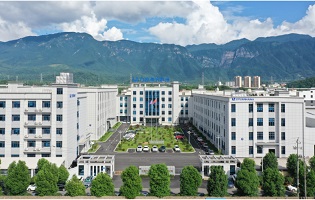
Look at the supplier’s certifications—ISO, CE, CSA. Ask about their experience with your type of process. Liyuan Haina Rectifier dates to 1997. They make IGBT and SCR units for plating, anodizing, electrolysis, and water treatment. Their high-power synchronous rectification and N+X modular design let you swap modules online without taking the line down.
What Does a Plating Rectifier Do?
Turn AC into Usable DC
The rectifier takes raw AC from the mains and converts it to DC with controlled voltage and current. That DC output is what drives the electrochemical reaction in the plating tank.
Hold the Output Steady
Once set, the rectifier holds voltage and current at the specified levels. That stability translates into uniform coating thickness and consistent oxide layers across the entire cathode surface.
Cut Energy Waste
A well-designed rectifier minimizes conversion losses. Less energy turned into heat means lower electricity bills and a cooler shop floor.
Keep the Line Safe
Built-in fuses, thermal cutoffs, and fault detection protect both the operator and the equipment. The rectifier should shut down cleanly when something goes wrong.
Why Liyuan Haina Rectifier Stands Apart
Liyuan Haina Rectifier has been specializing in the R&D, design, production, sales, and technical services of industrial rectifiers for over 27 years. With CE and ISO9001 certifications, we have achieved significant advancements in energy-saving synchronous rectifiers, positive & negative pulse rectifiers, electroplating surface treatments, and high-power thyristor rectifiers (SCR type). The products are well used in surface treatment industry, such as electroplating for chrome, copper, nickel, zinc and tin, anodizing and coloring, electrophoretic, plasma coating, PCB board plating and etc.
In addition to the surface treatment industry, our power supplies are also widely used in industries such as non-ferrous metal electrolysis, rare earth smelting, hydrogen electrolysis, water treatment, copper foil electrolysis, new energy and etc.
Plating Project Application Cases
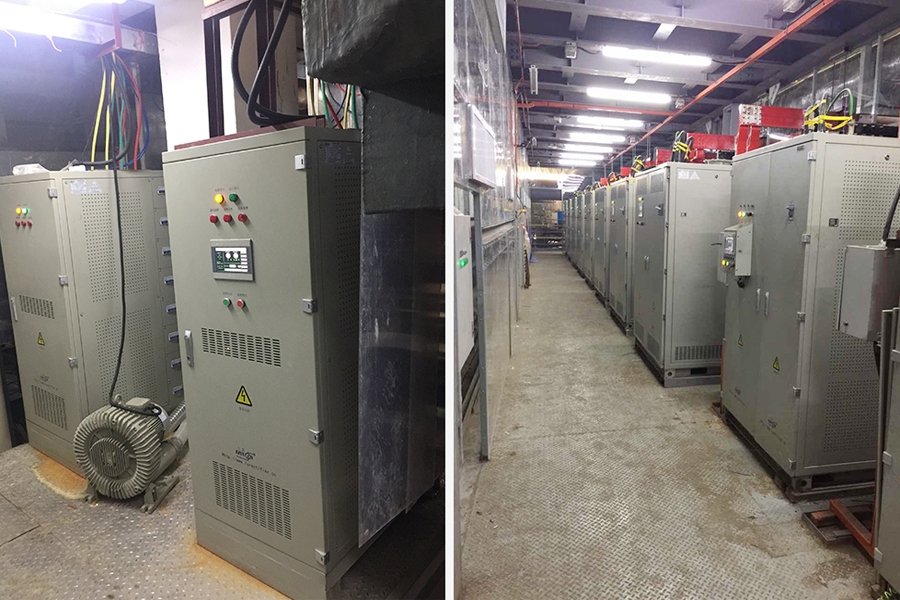
Turckey 10V 8000A IGBT type Nickel Plating Project

12V/500A Zinc Electroplating Rectifier Solution for Dubai Industrial Application
How to Get Your Electroplating Rectifier Quote – Have These Ready
- Input power (voltage, phase)
- Output requirements (voltage, current, power rating)
- Rectifier type (DC, pulse, programmable, etc.)
- Control and monitoring preferences
- Cooling method
- Size and installation constraints
- Safety and compliance needs
- Budget range
Among them, our electroplating rectifiers are extensively utilized for PCB electroplating, hard chrome coating, copper/nickel/zinc plating, and precious metal plating with gold and silver — delivering reliable power solutions for diverse hardware surface treatment applications.