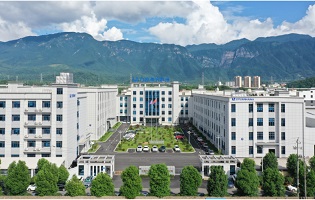

Liyuan Haina Rectifier has been building plating rectifiers for nearly three decades, with units running on production lines across the globe.
Feed AC in, get DC out. That is the simple version. But in a plating shop, the real question is how clean and how stable that DC is.
Poor DC from a plating rectifier means uneven deposition. Parts come out with thin spots, thick edges, or burnt areas. Scrap rates go up. Rework takes time. For shops running PCBs, hard chrome, or precious metals, that kind of variation directly hits the bottom line.
Liyuan Haina plating rectifiers hold steady at ±1% of the set value. Ripple runs 1–3%. That range covers decorative nickel, hard chrome, and precious metal layers where thickness tolerance is tight.
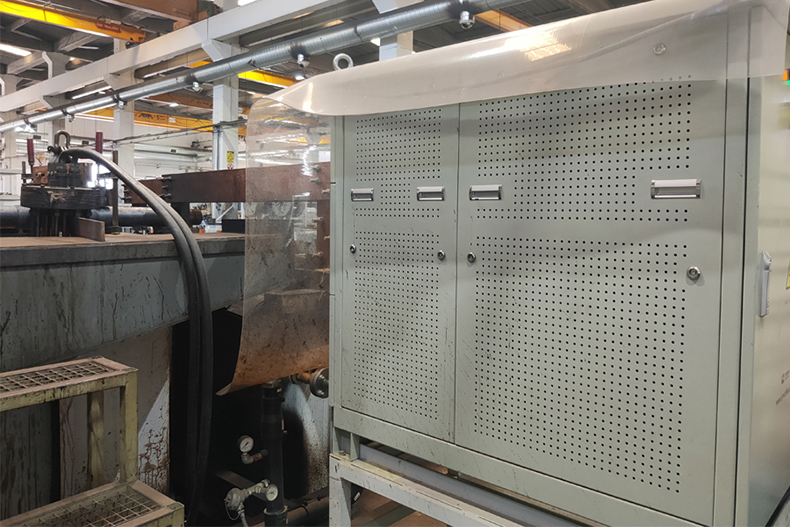
Chrome Plating Project in Turkey
Built for Real Conditions
Plating rectifiers operate in wet, hot, and corrosive environments. Acid mist gets into everything. Ordinary electronics do not last.
These rectifiers come with conformal-coated boards—a simple but effective defense against fumes. Protection circuits cover overvoltage, overcurrent, short circuits, and overtemp. No extra charges for those; they are standard.
Cooling can be air or water. Which one depends on the power level and the shop layout. Efficiency sits at 91–94% with a power factor above 0.95. Less waste heat, lower electric bills.
Talking to the Line
Plating rectifiers must integrate with PLC-controlled lines. Data exchange runs over RS485. Need remote setpoint or readback? The unit takes 4-20mA or 0-10V—two standards you will find in most plants. Need more current across a larger tank? Put several units in parallel. Worried about a module failing mid-run? N+1 redundancy means the rest cover the load while you swap out the bad one.
Where You Will Find Them
Liyuan Haina builds rectifiers for electroplating, anodizing, electrophoresis, and plasma plating.
In electroplating, their equipment handles:
- PCBs and circuit boards
- Hard chrome on cylinders, molds, and rolls
- Base layers of copper, nickel, or zinc before topcoats
- Gold or silver—on connectors, contacts, or decorative pieces
What Really Counts
Any plating rectifier can turn AC into DC. The ones worth paying for keep doing it, hour after hour, without drift, without failures, without unexpected shutdowns.
Liyuan Haina Rectifier builds hardware that holds its specs. Support is available when you need it—not just during the sale. The outcome: lower power consumption per batch, fewer parts sent back for replating, and lines that stay down only for scheduled maintenance.
FAQ
What is a safe ripple range for PCB lines?
Most spec sheets call for under 3%. Liyuan Haina plating rectifiers hold 1–3% across the full operating range.
Can I hook this up to my existing line controls?
That depends on what your PLC expects. RS485 is what most plants run. On the analog side, you have two standards to choose from—4-20mA and 0-10V. Use the one your system is already wired for. No need to change what works.
Which cooling type fits my operation—air or water?
Air works fine for most medium-duty setups. Go water when the line runs heavy current all day or the cabinet sits somewhere hot and cramped. Check your ambient temperature and floor space—that usually tells you which way to go.
What is the real energy saving over an old SCR rectifier?
Older SCR units run 70–80% efficient. These run 91–94%. On a 1000A, 12V line, that difference cuts about 15–20% off the power bill.
What happens if one module fails?
With N+1 redundancy, the remaining modules cover the load while you replace the failed one. Production does not stop.
Among them, our electroplating rectifiers are extensively utilized for PCB electroplating, hard chrome coating, copper/nickel/zinc plating, and precious metal plating with gold and silver — delivering reliable power solutions for diverse hardware surface treatment applications.