

Ever had chrome peel off in sheets? Or watched nickel come out splotchy on one side of a rack and perfect on the other? Most platers blame chemistry first. Nine times out of ten, though, it’s the power supply.
Your plating rectifier is the real gatekeeper. Get it wrong—or run one that’s slowly failing—and your reject bin fills up faster than you can say “strip and re-plate.”
Here’s what actually matters when you’re shopping for an electroplating rectifier: how these things work, why the industry is dumping old SCR bricks for high-frequency units, and how to pick the right one without overspending.
1. What an Electroplating Rectifier Actually Does
Before we get into selection, let’s clarify what an electroplating rectifier actually does on the shop floor. Sure, it’s a power supply. AC goes in, DC comes out. But what matters is this: the rectifier controls how fast metal ions pile onto your parts. If the DC current wavers—even a couple hundred milliamps—the crystal structure changes. Sometimes you see it right away (dullness, roughness). Other times it shows up as adhesion failure days later, after assembly, when your customer is already pissed.
2. How an Electroplating Rectifier Converts AC to DC
Old SCR rectifiers run at line frequency. The transformers on those old units are massive—they take up space, waste energy, and crank out heat.
High-frequency? Completely different animal.
AC comes in, gets filtered and rectified into raw DC. Then an inverter chops that DC into high-frequency AC. That’s the game-changer—it lets you use a transformer the size of your fist instead of something that needs a forklift.
From there, the transformer steps the voltage down to what your bath actually needs. Filter caps smooth out the DC, and a control loop watches everything, tweaking the output on the fly to keep it steady.
3. Watch Current, Not Voltage
Once you understand how an electroplating rectifier converts power, the next question is what to do with it. New platers fixate on voltage. Old habit. But electroplating is current-driven—Full stop. Faraday’s Law says deposited metal mass is proportional to the current passed through the circuit. Voltage is just pressure to push through whatever resistance the bath throws at you.
And bath resistance changes constantly. Temperature shifts. Additives deplete. Anodes passivate. All day long.
So a good electroplating rectifier runs constant current (CC) mode. Set the amperage; the unit adjusts voltage automatically to keep current locked. If you’re stuck with constant voltage (CV), current droops as the cycle progresses—first rack right, last rack thin.
Ripple is the other hidden killer. Poorly filtered output creates current spikes that burn the part surface while the valleys deposit too weakly. The resulting structure is laminated and brittle. For hard chrome and PCB plating, you want very low ripple. For decorative work, the tolerance is wider—but lower ripple always produces better results.
4. SCR or IGBT? A Quick Comparison
Here’s a side-by-side look at what each one gives you:
| Items | SCR Rectifier | IGBT Rectifier |
| Transformer | Power frequency transformer is very large and heavy. | High frequency transformer is small in size and weighs only a few tenth of the power frequency transformer. |
| Control mode | Phase-shift trigger | PWM modulation |
| Control speed | Slow control speed (10MS) | Fast control speed (within 0.1MS) |
| Accuracy | <5% | <1%, even 1‰ |
| Ripple | <10% | <0.5-3% |
| Efficiency | <80% | ≥94% |
| Power factor | 0-0.85 variable | ≥0.95 |
| Interference to power grid | Large and difficult to eliminate | Small and easy to eliminate |
| Maintenance | Difficult | Easy |
The IGBT unit costs more at the purchase order. But the efficiency gap alone often makes up for that difference—especially in 24/7 shops. How quickly depends on your power rates and run hours, but the direction is consistent: high-frequency wins on total cost of ownership.
5. Sizing a Plating Rectifier: Skip the Guesswork
Sizing an electroplating rectifier correctly is where most buyers get tripped up. Suppliers love to oversell. Bigger rectifier means a bigger invoice. But a unit running at 40–50% load actually operates in its least efficient band. You end up paying for capacity you don’t use, and your operating costs stay higher than they should be because the unit never hits its sweet spot.
Here’s a better approach—it’s not complicated, and you can do it yourself.
Figure out your current requirement first.
Start with your cathode current density—that’s the amperage per unit area your bath runs at. Multiply that by the total platable surface area on your rack. Then add a safety buffer, typically around 15–20%, to account for anode aging and contact resistance over time.
That gives you your target amperage. Round up to the nearest standard rectifier size and you’re in the ballpark.
Then confirm voltage.
Run a test at your target current and actually measure the cell voltage with a meter. Don’t guess. Most baths sit in the 6–9V range. Some, like hard chrome, run higher.
Leave yourself some headroom. Anodes passivate over time, baths change composition, and you don’t want to be voltage-limited six months down the road.
Don’t forget duty cycle.
If you’re running around the clock, you need a continuous-duty rated unit. If you’re doing pulse plating, make sure the peak current capability matches your process requirements—some pulse applications draw significantly higher instantaneous current than the average would suggest.
How to select rectifier type:
If the voltage is below 100V, IGBT power supply is recommended—under low voltage, SCR has low efficiency, large loss, large volume and is difficult to maintain. IGBT gives you 94% efficiency, energy saving, small volume and easy maintenance. New generation silicon carbide technology pushes that to 96% with even lower loss.
For indoor use, IGBT with independent air duct and water cooling is recommended—components are coated with three-proofing paint and fully sealed to reduce corrosion from dust and acidic gas.
Different applications call for different features:
Pulse power supply is for PCB deep hole and blind hole electroplating—high precision, strong plating capability, and supports multi-stage complex waveform.
Polarity reversing rectifier is for hard chrome plating and water treatment—output polarity reverses automatically, with short reverse voltage time. It improves efficiency and quality while saving electricity and material costs.
SCR rectifier is for electrolytic copper, aluminum, zinc and other industries requiring high voltage and current—in this case, SCR efficiency is higher than IGBT.
How to select cooling mode:
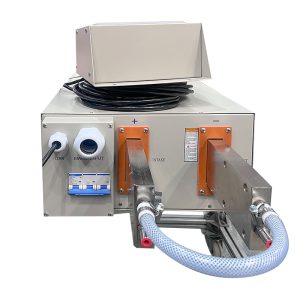
Water cooling is the right call if you have a water circulation system, or if the environment is harsh—high ambient temperature, corrosive gas, dust, no separate power supply. For multiple units, compare air vs. water costs before deciding.
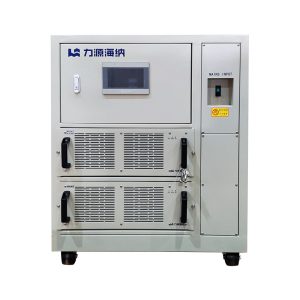
Air cooling works if there’s no water circulation system, and the environment is clean with good ventilation.
6. Installation – Two Mistakes That Ruin a Good Plating Rectifier
You can buy the best electroplating rectifier on the market. Install it wrong and it’ll perform like a cheap one.
Two common mistakes show up in plating shops all the time. Both are easy to avoid.
Ground loops. When equipment connects to ground at different points, circulating currents confuse the control logic. The fix is simple: single-point earth ground. No daisy-chaining.
Undersized DC cables. Long, thin cables drop voltage. The rectifier puts out 12V at its terminals but only 10V reaches the tank. Use the gauge specified in the manual. Keep cables short. Torque terminals properly—loose connections heat up and drop more voltage over time.
Where to place it. Keep water off the top—no pipes overhead, no dripping condensation. Leave working room in front; if you can’t pull the chassis or access the boards, every repair turns into a headache. Indoors, away from rinse tank splash and solvent fumes.
Get these basics right and your plating rectifier delivers what the spec says. Skip them and you’ll chase problems that aren’t really faults at all.
7. Keeping an Electroplating Rectifier Alive
Maintaining an electroplating rectifier isn’t glamorous. But it’s what separates an eight-year unit from a fifteen-year one.
Once a month, record your outputs—both at idle and under load. Keep those numbers; compare them to the baseline you took when the unit was new. And listen to the fans. Grinding or rattling? Bearings are on their way out. Also check the DC terminals—discoloration usually means a loose connection making heat.
Every three months, measure your ripple, clean the air filters if you’re air-cooled, and check the panel calibration against a separate shunt and voltmeter.
Once a year, do a proper megger test on the insulation, replace the DC bus capacitors on schedule, and torque every power connection to spec.
Skip these and you’re gambling. Stay on top and you’ll see a decade-plus service life.
One Example
A hard chrome line in Turkey runs at ±10V, 12,000A, with polarity reversal to even out the deposit. The N+1 design lets them pull a failed module without stopping the line. Not every shop needs that level of redundancy, but for continuous production it makes sense.
Similar setups have been done in the UAE for zinc, in Germany for automotive parts, and a handful of others across Europe and Asia.
If you’re looking for something specific—a pulse rectifier for gold, or a water-cooled unit for hard chrome—it’s worth talking to a supplier who’s done it before. Liyuan Haina Rectifier has been building these for over two decades, and they’re happy to help with custom sizing or application questions through their website.
Final Thought
The electroplating rectifier you choose is the backbone of your entire plating process. Cheap rectifiers are expensive in the long run. So are oversized ones. So are units with lousy ripple specs. Your rectifier determines the quality of every square millimeter of coating that leaves your shop.
Do the math on current. Run the numbers on efficiency. Ask for the data upfront. Your scrap rate and your electric bill will both thank you.
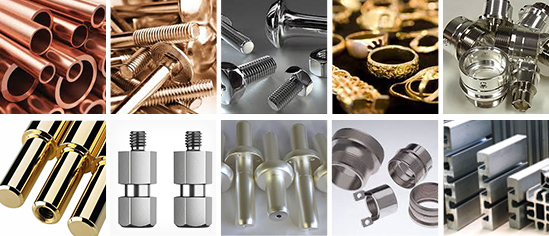
Among them, our electroplating rectifiers are extensively utilized for PCB electroplating, hard chrome coating, copper/nickel/zinc plating, and precious metal plating with gold and silver — delivering reliable power solutions for diverse hardware surface treatment applications.