

Polarity reversing power supply working principle
Polarity reversing in electroplating refers to a technique where the electrical current is periodically reversed during the plating process, meaning the anode and cathode are switched back and forth. allowing for a more controlled and even metal deposition on the workpiece, often used to improve surface quality and reduce stress on the plated layer; it’s also known as “periodic reverse current plating”.
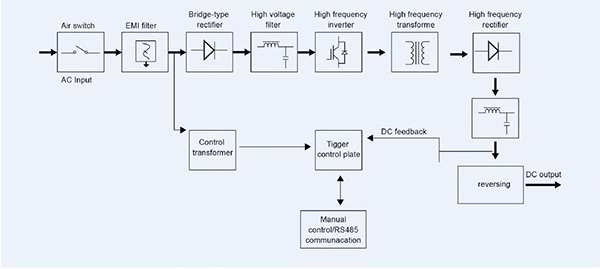
Polarity Reversing Rectifier Advantages
1.Improved surface finish
By periodically stripping a small amount of metal from the surface during the reverse current cycle,it can help smooth out irregularities and produce a more refined finish.
2.Reduced internal stress
Reversing the current can help minimize stress within the deposited metal layer, making the plating more durable.
3.Better adhesion
In some cases, the brief reverse current can enhance the adhesion of the plating to the substrate.
4.Enhanced throwing power
Can improve the plating quality in recessed areas or complex geometries.
How it works
A specialized electroplating power supply is used to automatically switch the polarity at predetermined intervals. With touch screen control of rectifier the polarity reversing cycle can be set to single or multiple cycles and repeated automatically. forward-reverse-forward-reverse-etc..
The “forward” cycle deposits metal onto the workpiece as usual.
The “reverse” cycle briefly removes a small amount of metal from the surface, acting as a cleaning step or etching. The passive oxide layer that forms immediately on contact with the air when the equipment stops running. Reverse polarity for 10 sec and then go to standard plating polarity.
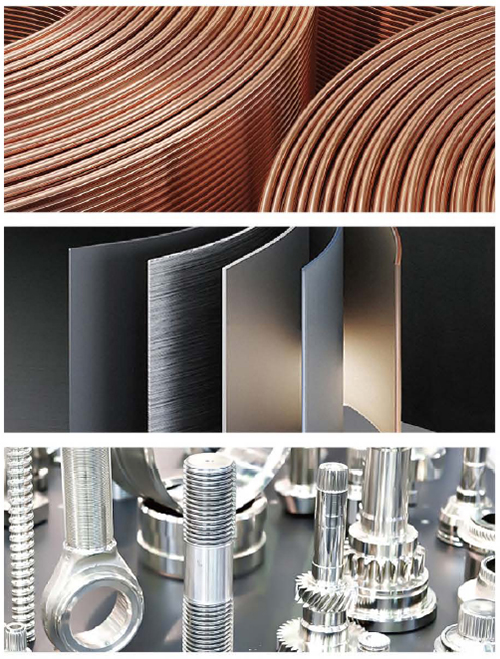
Applications in Electroplating
A polarity reverse power supply can periodically switch the polarity, so the work piece becomes the anode for a short time, causing some of the deposited metal to dissolve back into the plating solution.This will etch, clean, and prep for metal surface all in one bath.
Decorative plating
Used to achieve high-quality finishes on items like jewelry and automotive parts.
Plating on complex shapes
Can help ensure even metal deposition on intricate geometries.
Hard chrome plating
Helps improve the wear resistance of hard chrome coatings.
Electroetching prior chrome plating
Remove the passive oxide layer that forms immediately on contact with the air.